
AI Health
Friday Roundup
The AI Health Friday Roundup highlights the week’s news and publications related to artificial intelligence, data science, public health, and clinical research.
October 3, 2025
In this week’s Duke AI Health Friday Roundup: machine learning parses sleep data; fat-tailed lemurs point humanity’s way to the stars; AI system delivers health predictions for decades into the future; proposing an ‘S-Index’ to capture academic service contributions; potential pitfalls of using LLMs as stand-ins for human respondents in survey research; mapping the spread of measles in 2025; much more:
AI, STATISTICS & DATA SCIENCE

- “Our study reveals a concerning trend in sleep problems among late adolescents and adults aged 15 to 45 years in Denmark from 2010 to 2021. Using nationwide health surveys and registers, we observed an increase from approximately one-third to almost half of individuals reporting sleep problems over a decade. This increase was also accompanied by a 10-fold increase in melatonin use in the study population.” A research article published in Science Advances by Zucco and colleagues applies machine learning to the question of what factors drive sleep problems in adolescents and adults in Denmark.
- “AI systems that can accurately learn about and simulate the emergence of human diseases must also adjust for complex factors that are relevant to an individual’s health care. These include demographics (characteristics including age and sex), history of clinical care (such as previous diagnoses) and factors that affect health (smoking, body mass index or levels of alcohol consumption, for example).” Nature’s Yonghui Wu reports on research by Shmatko and colleagues that demonstrates an AI-based approach for predicting the onset of disease states up to 20 years in the future using EHR data.
- “…clinicians are missing the details needed to make informed choices between tools. ‘The general state of the evidence is terrible,’ said neurosurgeon Eric Oermann, who directs the Health AI Research Lab at NYU Langone. Researchers and companies are developing benchmarks that evaluate an LLM’s medical abilities, from simple early versions like taking the U.S. medical licensing exam to those involving real-world patient tasks and clinical reasoning.” STAT News’ Katie Palmer looks at the rollout of an AI chatbot by venerable medical resource UpToDate – along with the larger questions of the complexities of developing a reliable, trustworthy chatbot for the clinical space.
- “…there are many analytic choices which must be made to produce these samples. Though many of these choices are defensible, their impact on sample quality is poorly understood. I map out these analytic choices and demonstrate how a very small number of decisions can dramatically change the correspondence between silicon samples and human data. Configurations (N = 252) varied substantially in their capacity to estimate (i) rank ordering of participants, (ii) response distributions, and (iii) between-scale correlations. Most critically, configurations were not consistent in quality…” In a preprint article available from arXiv, Jamie Cummins cautions against the uncritical use of LLMs as stand-ins for human respondents in social science survey research – so-called “silicon samples.”
BASIC SCIENCE, CLINICAL RESEARCH & PUBLIC HEALTH
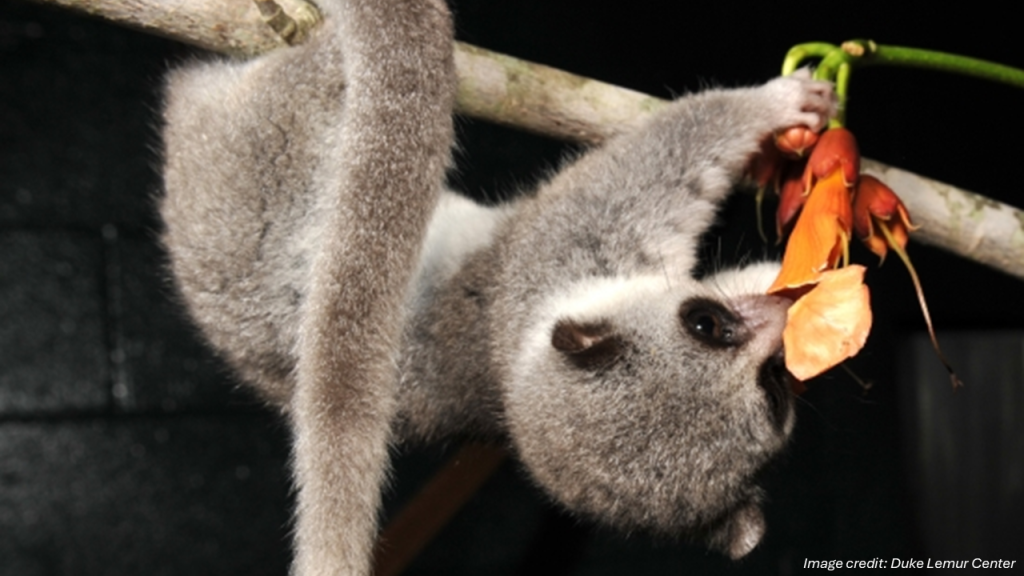
- “What began as a curiosity about body temperature has evolved into a mission to help humans sleep their way to the stars — guided by the rhythms of tropical lemurs, the precision of modern science, and the power of interdisciplinary collaboration.” Finally, some good news: Duke University’s Susan R. Miller explains how research into fat-tailed lemurs at Duke may unlock long-distance space travel for humans.
- “Scientists found that, in the cells of ageing mice with kidney inflammation, strands of mitochondrial DNA (mtDNA) contained an excess of certain types of nucleotides — molecular building blocks — that can harm DNA. This excess prompted the mitochondria to eject the abnormal fragments of genetic code into the cytosol, a fluid that fills the cell, in which the free-roaming mtDNA kick-started key inflammatory pathways associated with ageing.” Nature’s Gemma Conroy reports on recent research showing that mitochondria dumping tainted DNA may be implicated in inflammation and aging processes.
- “…a prospective cohort study reports that more than 99% of people who experienced these illnesses had at least one of four risks for cardiovascular disease. They had “suboptimal” high blood pressure, cholesterol, or blood glucose, or they were current or former smokers. More than 93% of the more than 9.3 million people in two national cohorts followed for 20 years had more than one risk factor.” STAT News’ Elizabeth Cooney reports on a new study that finds that heart attacks and other serious cardiovascular events almost always exhibit one or more risk factors for the condition(s).
- “Measles was officially declared eliminated — which means the virus is not continually spreading — in 2000, in large part because of aggressive vaccination campaigns. Experts now fear that status may be at risk, as childhood vaccination rates have been falling nationally.” In an article for the New York Times, Jonathan Corum and Teddy Rosenbluth map the spread of measles in the US in 2025 – the worst year for the disease since the previous modern record in 2019.
COMMUNICATIONS & Policy

- “The problem with these metrics-cum-performance indicators is that they are gameable by the unscrupulous and the desperate. This is a classic example of Goodhart’s law which states: ‘When a measure becomes a target, it ceases to be a good measure.’…These metrics provide perverse incentives for academics to publish as much as possible as quickly as possible, with as many self-citations as they can get away with — sacrificing quality and rigor to the gods of quantity and speed.” In essay for Live Science, Kit Yates anatomizes the key problems currently afflicting peer review and scientific publishing and proposes some countermeasures.
- “The lack of structural acknowledgment of nonresearch activities is a threat to the academic workforce. Faculty who spend substantial time on committee work, mentoring, diversity initiatives, and community outreach often do so out of a strong sense of professional duty and moral obligation, yet these efforts are rarely rewarded in formal promotion processes. Over time, this disconnect between effort and recognition can diminish faculty engagement, reduce institutional loyalty, and contribute to burnout…” In a viewpoint article published in JAMA, Mannix and Bell suggest that focusing on publication as the key desideratum for academic advancement misses out on some important contributions, including service, and propose an “s-index” to capture this facet.
- “Stepping out of the formal role on the NASEM study committee, the authors of this Perspective assert that there is insufficient evidence to support recommending any level of alcohol use to improve health. Clinicians should recognize the complex relationship between moderate alcohol consumption and health and should continue to ask patients about alcohol intake and provide guidance and support for adhering to authoritative, evidence-based recommendations regarding alcohol consumption.” In a perspective article published in JAMA, Calonge and colleagues attempt to place recent findings from a National Academies report on alcohol consumption – one that abstained from offering recommendations – in clearer context.
