Location
Hock Plaza, 2424 Erwin Rd
Durham, NC 27705
Hours
9:00 AM – 5.00 PM
Monday – Sunday
Get Involved
Phone: 919 684 8111
Email: cache@duke.edu

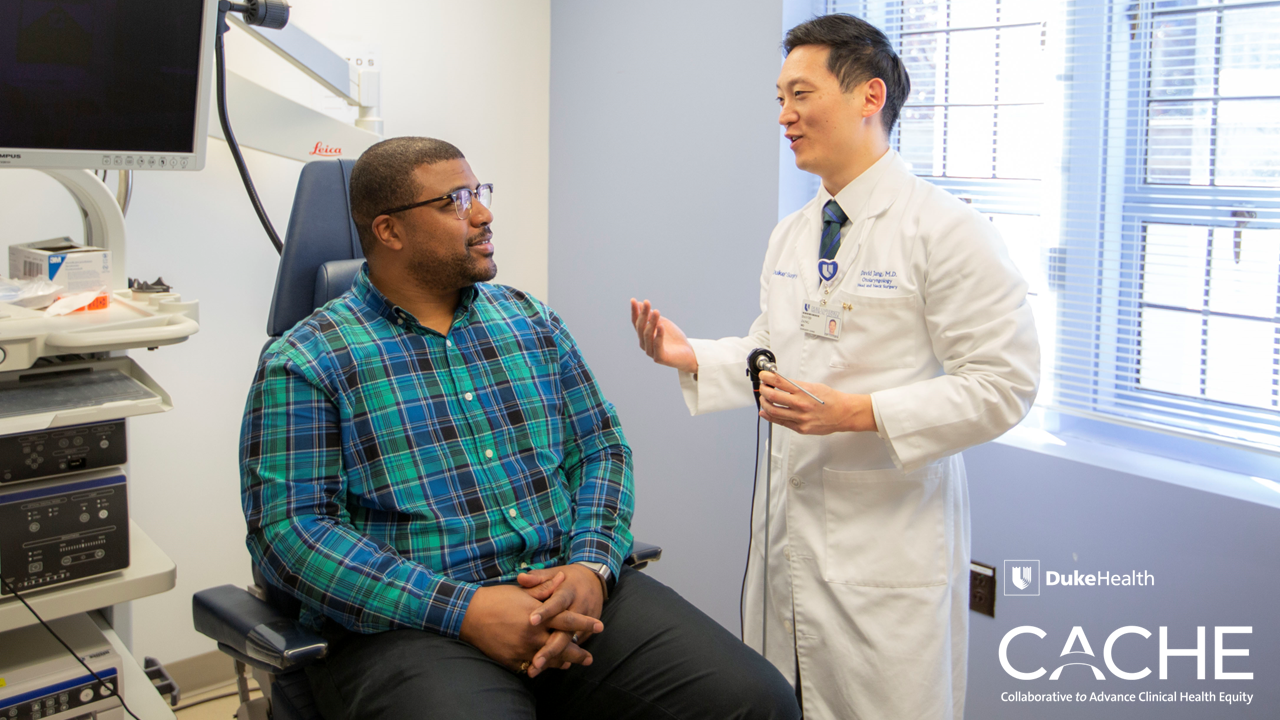
Colorectal cancer (CRC) is the second leading cause of cancer death in the United States. Timely screening reduces the likelihood of death from CRC and is recommended for average-risk adults aged 45-75. Over the past 30 years, deaths from CRC have fallen substantially for all racial and ethnic groups. However, African American adults continue to have an elevated risk of death from CRC. Further, over 25% of US adults are not up to date with CRC screening, and persons without health insurance or a usual care provider are less likely to be screened.
Data from large health systems such as Kaiser Permanente show that increasing screening rates to over 80% is associated with lower colorectal cancer mortality and with reductions in the gap in mortality between African Americans and other racial and ethnic groups. These findings prompted Duke CACHE to examine current CRC screening rates within Duke Health, with the goal of targeting opportunities for increasing screening, improving outcomes, and reducing health disparities.
We first focused on data from the Duke Primary Care (DPC) system. Here, we found high rates of screening (over 80%) and few disparities in screening among this highly insured population. However, when we looked at data from the Duke Outpatient Clinic, which serves patients who tend to be older and are more likely to be African American, we found an 11% point difference in rates of screening between White (81%) and African American (70%) patients.
To help close this gap and improve screening overall, Duke’s Population Health Management Office (PHMO) began an evidence-based intervention. Focusing on Medicare patients, Duke PHMO mails CRC screening tests to unscreened patients. Over two cycles, they have been able to screen over 25% of patients who were not up to date, consistent with prior published programs.
Building on this success, we plan to expand the mailed testing program to further close colorectal cancer screening gaps and assess the effects of improved screening on patient outcomes within the Duke system. We are also seeking additional grant funding to ensure that patients with abnormal initial screening tests receive prompt, equitable, and highly effective additional testing and treatment.
Hock Plaza, 2424 Erwin Rd
Durham, NC 27705
9:00 AM – 5.00 PM
Monday – Sunday
Phone: 919 684 8111
Email: cache@duke.edu

Sites@Duke Express is powered by WordPress. Read the Sites@Duke Express policies and FAQs, or request help.