Registration Open for Fall 2025 Scientific Writing Workshop Series
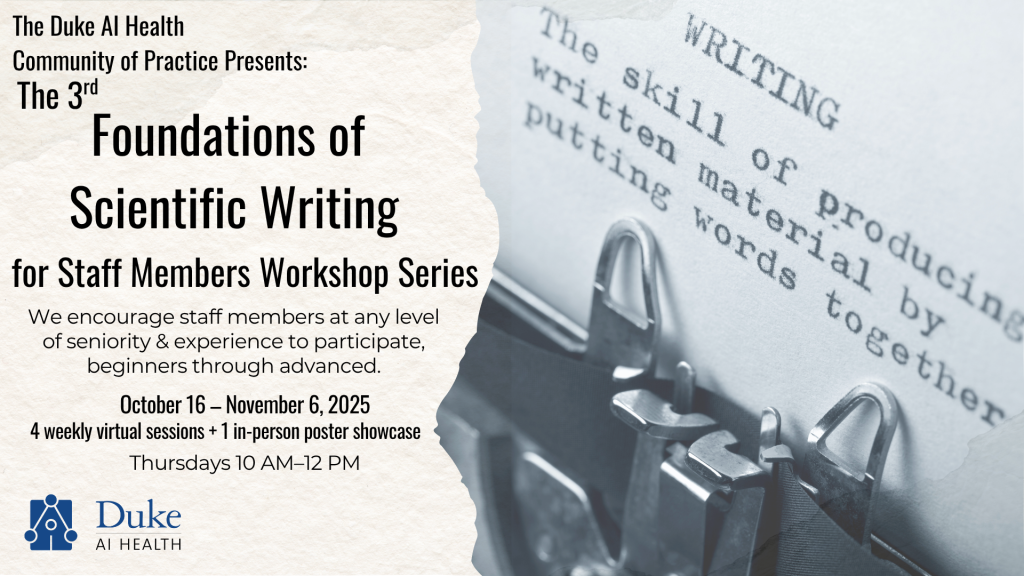
The Duke AI Health Community of Practice is pleased to announce our third Foundations of Scientific Writing Workshop Series, which will take place in the fall of 2025. Intended primarily for staff members interested in gaining experience with the basics of scholarly writing and publication, this mini-course consists of four virtual weekly classes that combine lecture and interactive elements, and culminates in the presentation of a final project in a poster session that will be held in December of this year.
Registration Open for Fall 2025 Scientific Writing Workshop Series Read More »