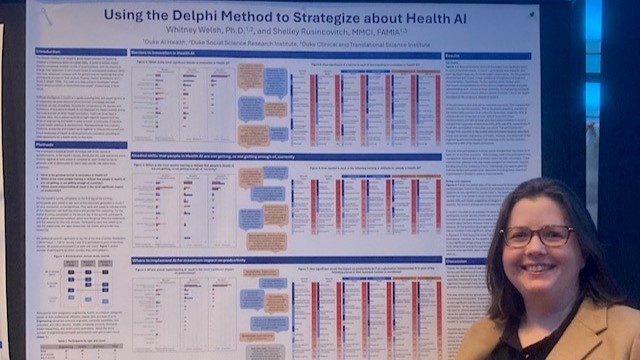
Whitney presenting Delphi poster

AI Health Research Scientist Uses Delphi Survey to Examine Consensus on AI Adoption

Duke AI Health Research Scientist Whitney Welsh, PhD, presented a poster, “Using the Delphi Method to Strategize about Health AI,” at the annual meeting of the Association for Clinical and Translational Science in Washington, D.C. this April. Welsh and co-author Shelley Rusincovitch, AI Health managing director, described the results of a Delphi survey conducted at the Duke Summit on AI for Heath Innovation last October. The survey explored whether a consensus exists regarding the main barriers to innovation in health AI, where there are gaps in education and training in health AI, and where in their workflows organizations should implement AI to see the most immediate impact on productivity. Consensus emerged on all three questions: lack of trust was seen as the single greatest barrier to innovation, experience with implementation as the greatest gap in training, and automating health documentation as the point of most immediate impact.

AI Health Research Scientist Uses Delphi Survey to Examine Consensus on AI Adoption Read More »

Virtual Town Hall collage

Research Town Hall Features Strategies for Scientific Communication

AI Health Communications Director Jonathan McCall recently took part in a Research Town Hall hosted by Duke’s Office of Scientific Integrity. The panel presentation, moderated by Dr. Monica Lemmon and including McCall, Dr. Jory Weintraub, Hannah Kania, Eric Monson, and Katie Lipe focused on different facets of scientific communication for a variety of potential audiences.

Research Town Hall Features Strategies for Scientific Communication Read More »

Intro to Machine Learning pic

Introduction to Machine Learning & AI in Health

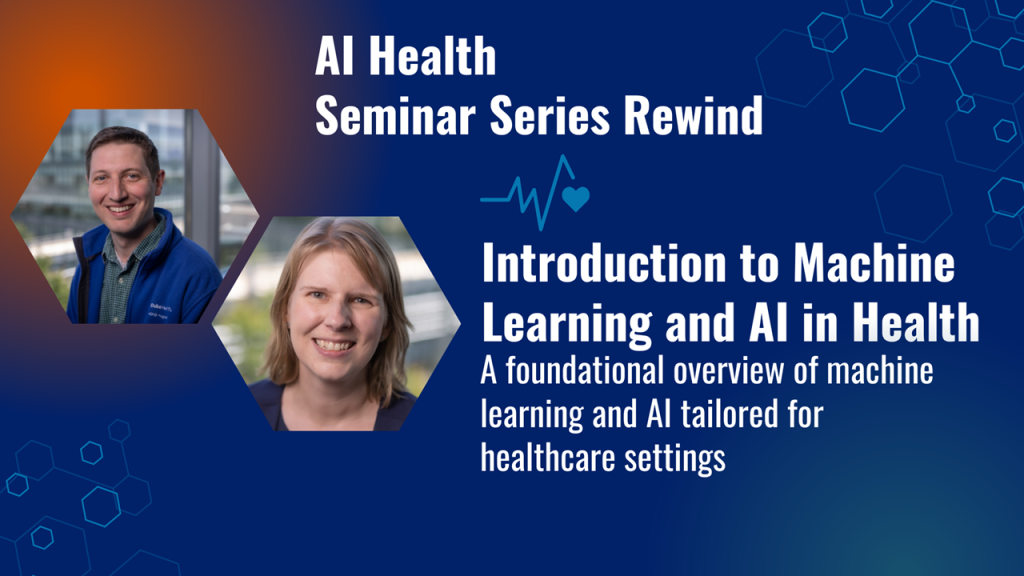
New to AI in healthcare or need a refresher? This accessible session presented by Matt Engelhard, Director of the AI Health Data Science Fellowship Program, and Shelley Rusincovitch, Duke AI Health Managing Director, offers a foundational overview of machine learning and AI tailored for healthcare settings. They explain how AI can be used to analyze medical images, text, and structured data, while also addressing potential risks and ethical considerations. Whether you’re just getting started or looking to reconnect with the basics, it’s a valuable resource—and a great primer ahead of the Duke Machine Learning Summer School 2025: Generative AI (MLSS-GenAI) happening June 2-6, 2025.

LEARN MORE

Introduction to Machine Learning & AI in Health Read More »

Group pic at DISS 2025

DISS2025 Keynote by Michael Pencina Explores AI’s role in Biostatistics

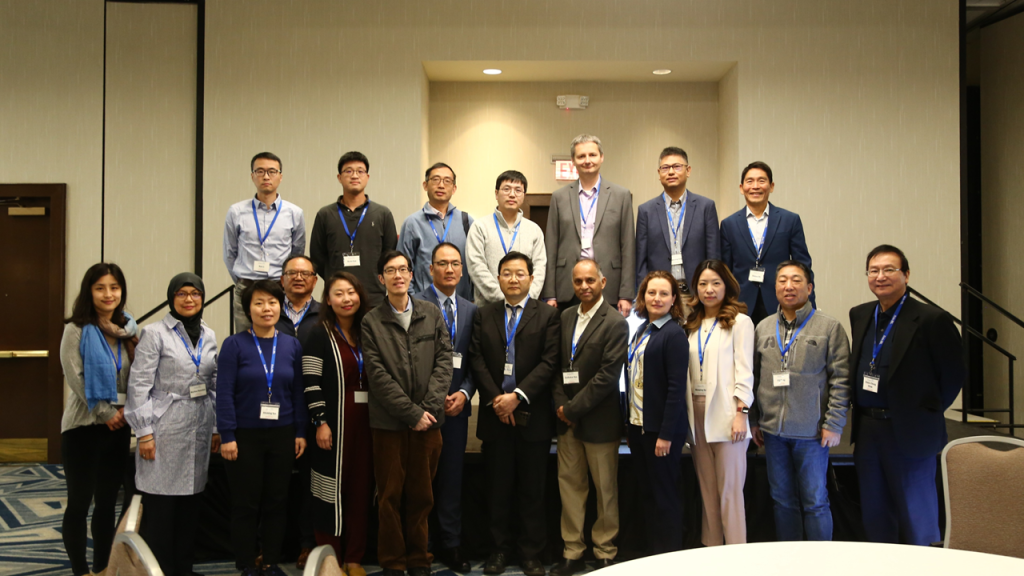
The 2025 Duke Industry Statistics Symposium (DISS2025) was successfully held in Durham, NC, from April 9–11, drawing more than 250 participants. The symposium, centered on the theme “Driving Clinical Research Forward with Advanced Statistics and Data Innovations: Biostatistics in the Age of AI/ML,” explored the evolving role of biostatistics and data science in pharmaceutical development, particularly in the context of artificial intelligence (AI) and machine learning (ML). Dr. Michael Pencina, Director of Duke AI Health and Chief Data Scientist for Duke Health, delivered a keynote address highlighting the critical intersection of data science and clinical research. The event also featured invited speakers, discussants, panelists, short course instructors, poster presenters, and session chairs.

DISS2025 Keynote by Michael Pencina Explores AI’s role in Biostatistics Read More »

Flyer for the MLSS-GenAI

12th Duke Machine Learning Summer School, June 2-6, 2025

The Duke AI Health Community of Practice is pleased to announce the Duke Machine Learning Summer School 2025: Generative AI (MLSS-GenAI), a 5-day, in-person class that provides lectures on the fundamentals of generative AI methods and applications. The curriculum is designed for individuals interested in learning about generative AI, with a focus on recent deep learning methodologies. MLSS-GenAI will introduce the mathematics and statistics at the foundation of current generative and representation learning models and provide hands-on training in the latest machine learning software using the PyTorch framework.

Strength in mathematics and statistics is a significant plus and will make all MLSS-GenAI material more accessible; however, it is not required to benefit from much of the program. Concepts will be introduced as intuitively as possible, with minimal math and technical details. As concepts are developed, more math will be introduced, but only the minimum needed to explain concepts. Case studies will demonstrate how the technology is used in practical generative AI applications. Finally, the class will introduce participants to coding software used to make such technology work in practice.

REGISTER

12th Duke Machine Learning Summer School, June 2-6, 2025 Read More »

AI Health Readership Survey Impact Results

Thank you to everyone who participated in Duke AI Health impact survey! We received a lot of great feedback, and we look forward to sharing the results in next month’s newsletter. As a quick preview, over 95% of survey participants who had interacted at least once with AI Health in the last year reported that those interactions changed how they thought about AI; October’s Innovation Summit and the Friday News Roundup were participant favorites.

AI Health Readership Survey Impact Results Read More »

researcher typing

PCORI Grant Advances Digital Symptom Monitoring at Duke

The Patient-Centered Outcomes Research Institute (PCORI) has awarded Duke University Health System funding to implement electronic monitoring of patients’ self-reported symptoms during cancer treatment. This project integrates Duke’s strengths in digital health and implementation science to make symptom monitoring a routine part of cancer care. Co-led by AI Health Senior Advisory Board Member Dr. Richard Shannon, who also serves as chief medical officer and chief quality officer for Duke Health, and Duke hematologist/oncologist Dr. Thomas LeBlanc, it builds on patient-centered research to improve well-being, reduce hospital visits, and support treatment adherence. Original story at link below by Liz Switzer (Duke Medicine)

READ MORE

PCORI Grant Advances Digital Symptom Monitoring at Duke Read More »

Seminar presenters picture

Harmonizing Data to Improve Stroke Risk Prediction

Research in stroke risk prediction is enhanced by the inclusion of a broad range of data from different patient cohorts that strengthen the evidence for the scientific questions being investigated. In two recent AI Health Virtual Seminars, researchers from Duke AI Health and the American Heart Association (AHA) introduced an open metadata repository designed to give researchers access to the processes and methods used to harmonize data from four large, National Institutes of Health-funded cohort studies.

In the first seminar, presenters explained how the datasets were harmonized and demonstrated how users can access and utilize the metadata repository. In a follow-up seminar, leading researchers presented new methodologies and results from studies that were conducted with the harmonized dataset. The repository offers resources and tools for studies in stroke risk prediction, and researchers are invited to review the seminar recordings to learn more about how they can leverage it for their own work.

Watch the recordings to learn how the metadata repository supports research into stroke risk prediction:

Harmonizing Data to Improve Stroke Risk Prediction Read More »

Duke Responsible AI Symposium: Content and Recordings Now Available

The recent 2025 Responsible AI Symposium, co-sponsored by The Society-Centered AI Initiative at Duke, the Duke Artificial Intelligence Master of Engineering, Duke AI Health, the Duke Office of Climate and Sustainability, and the Coach K Center for Leadership and Ethics (COLE), took place this past February and March at Duke University’s Karsh Alumni Center. The four-day event, which included industry and academic keynote talks, research talks, a poster session and a hackathon, convened a wide array of leaders, researchers, and students whose work is focused on society-centered AI and responsible AI.

Programming, speaker bios, event photos, and video from the 2025 Symposium are all available at the link below, where information about the planned 2026 event will posted when available. Abstracts from research talks are also available at the site.

LEARN MORE

Duke Responsible AI Symposium: Content and Recordings Now Available Read More »

photo of Engelhard and Kumar

NIH Pragmatic Trials Collaboratory Grand Rounds: Translating Clinic Notes for Patient with GPT-4

In a recent session of the weekly NIH Pragmatic Trials Collaboratory Grand Rounds series (recording and slides available at link below), Duke AI Health Faculty Affiliate Matthew Engelhard, MD, PhD, (left) and Anivarya Kumar, (right) a fourth-year medical student at Duke University School of Medicine, presented a talk titled “A Cross-Sectional Study of GPT-4–Based Plain Language Translation of Clinical Notes to Improve Patient Comprehension of Disease Course and Management.” In this presentation, Engelhard and Kumar described a project that employed the widely available GPT-4 large-language model to render physicians’ clinical notes into plain-language versions that would be more readily understood by patients.

LEARN MORE

NIH Pragmatic Trials Collaboratory Grand Rounds: Translating Clinic Notes for Patient with GPT-4 Read More »